
Topics in American Art
with content focusing on representational art
Excellent art is food for the soul.
Enjoy art's many flavors
at a museum near you.
Introduction
One of our key objectives is adding to the canon of knowledge about American representational art. We do this by using our online platform to gather and publish substantive* information from hundreds of institutional sources. In recent years we have concentrated on accreting information about under-represented topics among 200+ in total.
Topics in American Art, is a catalogue published by us since 2003. It covers over 200 topics. Included are thousands of Resource Library** articles and essays, many lavishly illustrated, and often accompanied by museum exhibition materials such as checklists, gallery guide texts, wall panel and extended label texts, in-house magazine articles -- and more. These materials often are unavailable elsewhere online.
Topics entries may also include links to other online materials sourced from hundreds of museums plus references to videos in disc format, paper-printed books and articles. A single topic may contain dozens of outbound links.
Who benefits from Topics in American Art?
Contents are used by educators designing course content, scholars, curators, docents, students, librarians, collectors, potential donors to museums, plus art lovers everywhere seeking greater understanding of American art. Enjoy!
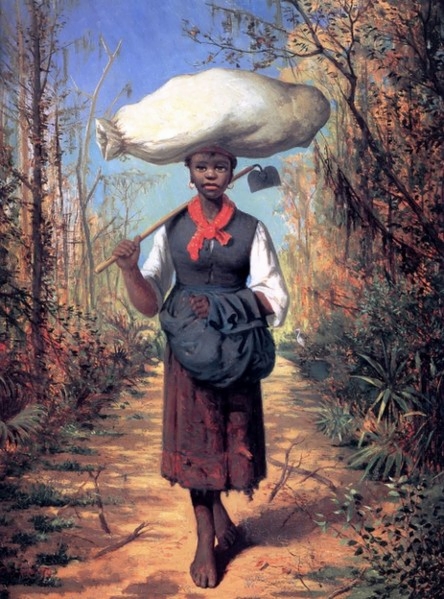
(above: James Wells Champney, Returning from Harvesting, 1874, oil on board, 17 x 13 inches. Public domain, via Wikimedia Commons*)
What topics are available?
Here is an alphabetical listing of topics: A - C / D - G / H - L / M - P / Q - Z

(above: Colin Campbell Cooper, Summer, 1918, oil on canvas, 50 x 60.25 inches. Public domain, via Wikimedia Commons*)
Why are some exhibit references colored gray?
Besides what we publish, a wide variety of materials are posted by museums for their exhibitions. Contents on a museum's own page for an exhibition may include narrative paragraphs about the exhibition, photos of art objects, plus links to: a press release for the exhibition, newspaper and magazine articles, promotional PSA videos, lecture videos, gallery guides, brochures and checklists.
We sweep references to museum exhibits within individual topics for discontinued links on an irregular basis as time permits.
Many museums hosting exhibits eventually remove public access to their previously posted URLs. Upon discovery, rather than remove our reference to an exhibit in its entirety, we now only remove the discontinued URL, retain the link to the museum plus our informative text, then color our reference gray. By keeping the exhibit name and our link to the hosting museum, you may easily contact the museum to inquire about its previously posted exhibit information. You can also copy exhibit and museum names as keywords for a Google search. This approach often works when a museum has changed the URL for an exhibit without providing a new pathway to it.
In times past we -- unfortunately in hindsight -- erased
a whole citation when we found a dead link to it. Since iterations of most
of our pages have been permanently saved by The Internet Archive and other
archives, you may be able to look back through time to find information
we long ago deleted from our pages because outside links became dead. If
you come across a dead link, see Durability and
protection of content for hints on how to access lost material through
online archives.
An invitation to museums
We advocate for museums to permanently make available materials about special exhibitions on their website. Most museum websites now have a "past exhibitions" section. Often, when information about an exhibition is first posted, a permanent URL is created that is carried forward in website sections for future, current and past exhibitions. A common format is: http//museum name.org/exhibitions/name of exhibit.
A wide variety of materials are posted by museums for an individual exhibition. Contents on a page for an exhibition may include narrative paragraphs about the exhibition, photos of art objects, plus links to: a press release for the exhibition, newspaper and magazine articles, promotional PSA videos, lecture videos, gallery guides, brochures and checklists.
Once a museum has decided upon a URL format for presenting online exhibition information, it is important that the format be maintained permanently. This is to prevent dead links in articles, research papers and other materials published by outside persons and organizations.
An effect of Covid temporary museum closures in 2020-21 was that scores of art museums greatly enhanced the quality and quantity of online exhibit presentations.
* For a further idea on what we consider substantive online information, please see exhibit-specific materials we seek to help us decide whether or not to issue grants for museum exhibits.
Our other main catalogues providing useful resources:
Distinguished Artists is our national registry of historic artists.
Exhibition Catalogues, Brochures, Gallery Guides and Related Materials
How to find content on our site using search engines
Conduct keyword searches within our website and Resource Library, a collection of articles and essays honoring the American experience through its art, using the advanced search feature of these search engines:
Or, before entering keywords in a basic search, enter site:tfaoi.org
Also see Indexes and information retrieval for more information.
Icons and legends
When an image is sourced from Wikimedia Commons, an icon tag is placed on the page containing it. The tags are:
*Tag for expired US copyright of object image:

and
**Tag for some rights reserved:

Image legend for multiple artists:
For further biographical information on selected artists cited above, please see America's Distinguished Artists, a national registry of historic artists. Following are examples of artworks created by artists referenced in the above article or essay. Artworks and/or photographs shown may not be specific to this article or essay and are likely not cited in it. All images were obtained via Wikimedia Commons, which believes the images to be freely available for presentation here. Another source readers may find helpful is Google Images.
Image legend for a single artist:
For further biographical information on the artist cited above, please see America's Distinguished Artists, a national registry of historic artists. Following is an example of artwork created by the artist referenced in the above article or essay. The image shown may not be specific to this article or essay and is likely not cited in it. The image was obtained via Wikimedia Commons, which believes the image to be freely available for presentation here. Another source readers may find helpful is Google Images.
or
For your further enjoyment and pleasure, shown
below is an artwork by the artist noted above that may not have been
included in the referenced exhibit. The image was sourced from Wikimedia
Commons. Another source readers may find helpful is Google Images.
Our page directional icons are:
 Return to
and
 Go to
Go to
Return to Topics in American Art - Site Guide
**About Resource Library
 Resource Library is
a freely available online publication containing a collection of articles
and essays honoring the American experience through its art. Since 1997, Resource
Library and its predecessor Resource Library Magazine have
cumulatively published 1,300+ articles and essays written by hundreds of
identified authors, thousands of other
texts not attributable to named authors, plus 24,000+ images, all providing
educational and informational content related to American
representational art. Texts and related images are provided almost
exclusively by nonprofit art museum, gallery
and art center sources.
Resource Library is
a freely available online publication containing a collection of articles
and essays honoring the American experience through its art. Since 1997, Resource
Library and its predecessor Resource Library Magazine have
cumulatively published 1,300+ articles and essays written by hundreds of
identified authors, thousands of other
texts not attributable to named authors, plus 24,000+ images, all providing
educational and informational content related to American
representational art. Texts and related images are provided almost
exclusively by nonprofit art museum, gallery
and art center sources.
All published materials provide educational and informational content to students, scholars, teachers and others. Most published materials relate to exhibitions. Materials may include whole exhibition gallery guides, brochures or catalogues or texts from them, perviously published magazine or journal articles, wall panels and object labels, audio tour scripts, play scripts, interviews, blogs, checklists and news releases, plus related images.
Resource Library is published by Traditional Fine Arts Organization (TFAO).
What you won't find:
User-tracking cookies are not installed on our website. Privacy of users is very important to us. You won't find annoying banners and pop-ups either. Our pages are loaded blazingly fast. Resource Library contains no advertising and is 100% non-commercial. .
(left: JP Hazeltine, founding editor, Resource Library)
Links to sources of information outside our website are provided only as referrals for your further consideration. Please use due diligence in judging the quality of information contained in these and all other websites. Information from linked sources may be inaccurate or out of date. We neither recommend or endorses these referenced organizations. Although we include links to other websites, we take no responsibility for the content or information contained on other sites, nor exert any editorial or other control over them. For more information on evaluating web pages see our General Resources section in Online Resources for Collectors and Students of Art History.
*Tag for expired US copyright of object image:
Copyright 2025 Traditional Fine Arts Organization, Inc., an Arizona nonprofit corporation. All rights reserved.