
American Visionary Art
What is American Visionary art?
Visionary artworks show aspects of the ordinary natural world presented in an unconventional way. Viewers often see the art as dreamlike, mystical, spiritual and always imaginative. These self-taught artists show a personal vision of the world as they would like it to be, not as it actually is or was.
Essays we've published:
In 2014 we published an essay by Steven Pattie named Walking in the Spirit: American Visionary Artists written in conjunction with an exhibit of the same name at the Westmont Ridely-Tree Museum of Art. This essay offers various interpretations of the word "visionary" and names several well-known artists. Four images accompany it.
In our 2015 we published Welcome to the World of Mr. Imagination, a major essay by Martha Henry, written in conjunction with a 2015 exhibit at Intuit Art Museum https://art.org/ . Her essay covers the life and art of Gregory Warmack, better known as Mr. Imagination. 10/26
In 2008 we published The Cosmic Visions of Ed Nelson, an extensive essay by Peter Hastings Falk about the art and experiences of Edward M. Nelson, (1908-1992) an American outsider and visionary artist known for his cosmic, UFO-themed, and metaphysical artworks. Discoveries in American Art has published online an illustrated version of the essay.
A museum devoted to visionary art
A Baltimore, Maryland museum is wholly devoted to visionary art: the American Visionary Art Museum
High-quality online materials beyond our own articles and essays
We continuously search the Web for high-quality online materials beyond our own articles and essays. Occasionally, we audit to see if links are still active. Some links were discontinued by their sources. Upon finding broken links, we search to see if the source relocated the information to another place. If so, we publish a replacement link. If that doesn't work, we color the reference gray and remove the link.
John Dilg - Arterial Resources was held at the Figge Art Museum in 2019. The museum's brief post says the exhibit "... represents John Dilg's ongoing search for visual forms that best distill a life of memory and experience. His small, devotional, landscapes which critic Roberta Smith has described as "cartoon-visionary," explore a life-long interest in the living-breathing aspects of the natural environment. The exhibition takes its name from the eponymous painting of a verdant mound, bubbling with streams of life-giving water and by implication the fragility of life should earth's arteries run dry." Five images accompany the article. 10/26
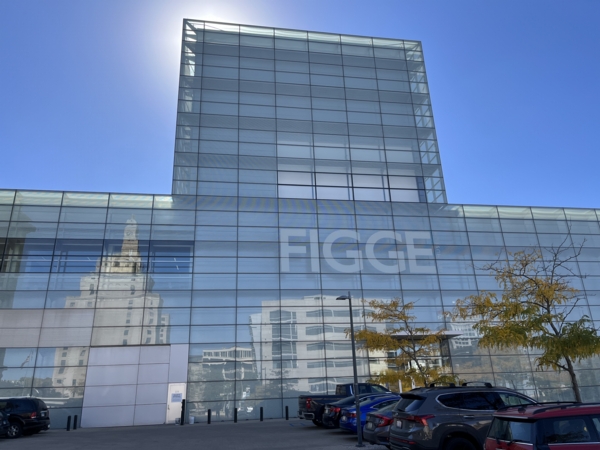
(above: Figge Art Mueum. 2022, Photo by John Hazeltine)
The Lost World: The Art of Minnie Evans was held in 2025 at the High Museum of Art. The museum said in its narrative that "Minnie Evans once said her drawings of harmoniously intertwined human, botanical, and animal forms came from visions of "the lost world," or nations destroyed by the Great Flood as described in the Book of Genesis. After her grandmother died in 1934 and the visions she experienced in childhood became stronger, Evans produced a large body of work ranging from abstract to representational styles." The museum's online presentation includes 14 images of artworks in the exhibit, each with an interpretation. There's also a photo of the artist and a link to "The Enduring Power of Minnie Evans" , an in-depth article by Katherine Jentleson in Arts Southeast. 11/26
Martin Wong: Human Instamatic was held at The Bronx Museum of the Arts in 2015-2016. The museum's post says the exhibit offered "... the first in-depth assessment of Wong's formal contributions as a painter, placing his work in line with such 20th-century painters as Marsden Hartley and Alice Neel, both renowned for their insightful portraits of the communities in which they lived." The exhibit was curated by Sergio Bessa, Ph. D., Director of Curatorial and Educational Programs at the Bronx Museum and Yasmín Ramírez, Ph.D., an art historian and Adjunct Curator at the Bronx Museum. Twelve panoramic views of the exhibit are included in the post. 10/26
Martin Wong: Human Instamatic toured to the Wexner Center for the Arts in 2016. The museum's post includes 11 panoramic views of the exhibit. 10/26
Martin Wong: Human Instamatic was presented at the Berkeley Art Museum & Pacific Film Archive in 2017. The museum's post says the exhibit was a survey of " ... the career of Chinese American painter Martin Wong (1946-1999), from his early years painting street portraits in Northern California -- where he dubbed himself the "Human Instamatic" -- to his role in New York's gritty downtown art scene in the 1970s and 1980s and his late work in San Francisco..." BAMPFA's West Coast presentation of the internationally touring retrospective featured "an expanded roster of work that highlights the artist's formative emergence in the Northern California art scene of the 1970s." The BAMPFA presentation was organized by Constance M. Lewallen, adjunct curator. Nine artwork images accompany the museum's post. 10/26
Mr. Imagination: Chicago Self-Taught Artist was a 2014 exhibit at the Brauer Museum of Art with eclectic multimedia creations by the self-taught visionary artist Mr. Imagination (Gregory Warmack, 1948-2012). The exhibition included selections from the extensive collection of Robert Alter and Sherry Siegel and was curated by Gregg Hertzlieb and Nina Corazzo, Walter E. Bauer Professor of Art. The artist's SAAM biography -- accompanied by five images -- says "Mr. Imagination began to carve figures from found pieces of industrial sandstone (a by-product of steel manufacturing) during the early 1980s. As his work attracted attention, he began to use another salvaged material-bottle caps-toward the end of the decade. Warmack excels at turning discarded materials from the streets and alleyways of his hometown into art, and transforming the castoffs of contemporary society into celebrations of his unique identity." 11/26 (change to gray & add SAAM link)
Remembering the Nut Museum: Visionary Art of Elizabeth Tashjian was a 2022 exhibit at the William Benton Museum of Art. The museum's post says "In April 1972, Old Lyme artist Elizabeth Tashjian (1912-2007) opened on the ground floor of her Victorian mansion a museum devoted to nuts. The Nut Museum operated until 2002 and featured Tashjian's nut paintings and sculptures, as well as a collection of nuts, nutcrackers and nut-related memorabilia." Twelve images are included in the post. 10/26
Saya Woolfalk: Augmented Visionary Reality Outpost was shown at the Columbus Museum in 2019-2020. The museum's online coverage says "Since 2006, Saya Woolfalk has been imagining and creating an alternative universe that combines science fiction, ceremonial ritual, technology, identity, and art. This other universe exists in the future and past simultaneously. Overall, Woolfalk's ongoing project considers identities and influences across cultures, especially in relation to our contemporary world. Each museum that hosts one of the artist's fantastical, immersive, multi-sensory installations helps continue and expand the story of this fictional world." A copy of the exhibit's five page gallery guide is included as well as nine installation photos. 11/26
The Surreal Visions of Josephine Tota was exhibited at the Memorial Art Gallery of the University of Rochester in 2018. The museum says Tota "...imbued over 90 small jewel-like paintings with the richness of her strange imagination. Themes of metamorphosis, family bonds, physical pain, human frailty, the natural world, loss, and tragedy dominate Tota's obsessive and otherworldly depictions. Despite her relative isolation in producing this body of work, Tota was profoundly influenced by years of amateur art classes at MAG's community art school, the Creative Workshop, and her personal interest in medieval and modern art." Listen to an eight minute review of exhibit by Jeff Spevak. 11/26
Terry Hays: Cosmic Garden was a 2019 exhibit at The Grace Museum. The museum's narration says "Trees, waterfalls and islands populate an exotic landscape embellished with meticulously hand-painted designs and symbols inspired by many divergent cultures. In the Cosmic Garden's symbolic reality, Hays presents a harmony of opposites suggestive of Jung's cosmic tree as a universal archetype." A 17-minute video is included. 11/26
Testament of the Spirit: Paintings by Eduardo Carrillo is a 2018 exhibit at the Pasadena Museum of California Art which says: "Eduardo Carrillo's (1937-1997) artwork has been described as mystical, realistic, surreal, and visionary. His imagery, whether grounded in the everyday world or infused with magical realism, reflects his relationship to his native California and to his Mexican heritage, as well as to his early religious upbringing and respect for European traditions in art." Also see Museo Eduardo Carrillo Accessed 2/18
Testament of the Spirit: Paintings by Eduardo Carrillo is a 2018 exhibit at the Crocker Art Museum which says: "Eduardo Carrillo's artwork has been described as mystical, realistic, surreal, and visionary. His imagery, whether grounded in the everyday world or infused with magical realism, reflects his relationship to his native California and to his Mexican heritage, as well as to his early religious upbringing and respect for European traditions in art." Also see Wikipedia information Accessed 8/18
The Unbridled Paintings of Lawrence Lebduska is a 2019 exhibit at the Mennello Museum of American Art which says: "Lebduska's dreamlands and invented gardens teem extraordinarily with life and optimism in a nostalgic, uncorrupted style that captured the admiration of the American public. These intrinsically painted Edens propelled the artist and his work to celebrity among galleries, collectors, and museums during the rise of the avant-garde movement taking hold of the art world in New York and abroad." Accessed 3/19
 Return to online topical information
about Representational Art (other): 20-21st
Century
Links to sources of information outside of our web site are provided only as referrals for your further consideration. Please use due diligence in judging the quality of information contained in these and all other web sites. Information from linked sources may be inaccurate or out of date. TFAO neither recommends or endorses these referenced organizations. Although TFAO includes links to other web sites, it takes no responsibility for the content or information contained on those other sites, nor exerts any editorial or other control over them. For more information on evaluating web pages see TFAO's General Resources section in Online Resources for Collectors and Students of Art History. Individual pages in this catalogue will be amended as TFAO adds content, corrects errors and reorganizes sections for improved readability. Refreshing or reloading pages enables readers to view the latest updates.
 Search Resource Library for everything about American
art.
Copyright 2026 Traditional Fine Arts Organization, Inc., an Arizona nonprofit corporation. All rights reserved.